Summer Road-Trip Tire Heat Checklist: Pressure, Load, and Warning Signs
A 2026 practical checklist for tire pressure, load limits, heat buildup, TPMS alerts, and pre-trip inspections before long summer drives.
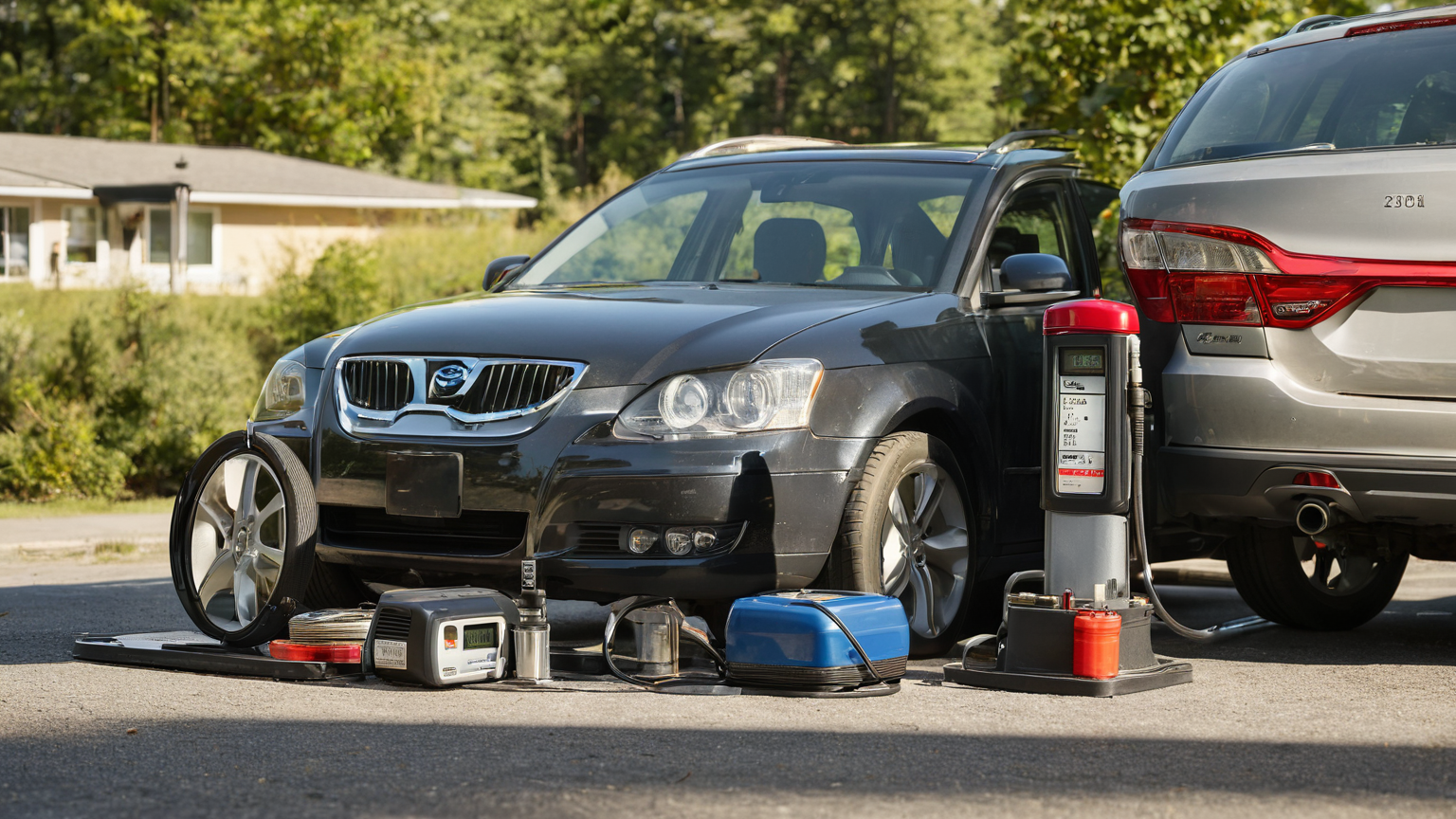
Summer road trips stress tires with heat, highway speed, and cargo weight. The right response is not buying every gadget; it is checking the basics before the first long drive and responding quickly when a tire looks, feels, or reads wrong. This guide uses current NHTSA tire-safety guidance and fuel-economy maintenance guidance as of May 2026.
The 10-minute pre-trip checklist
| Check | How | Pass condition |
|---|---|---|
| Cold pressure | Parked for several hours; use a reliable gauge | Door-jamb placard value, not sidewall max |
| Tread | Look across inner, center, outer tread | No cords, bald bands, or embedded damage |
| Sidewall | Scan for bulges, cracks, cuts | No swelling or fresh injury |
| Load | Compare luggage/passengers with vehicle rating | Cargo does not exceed payload |
| Spare/inflator | Verify access and condition | You can use it roadside if needed |
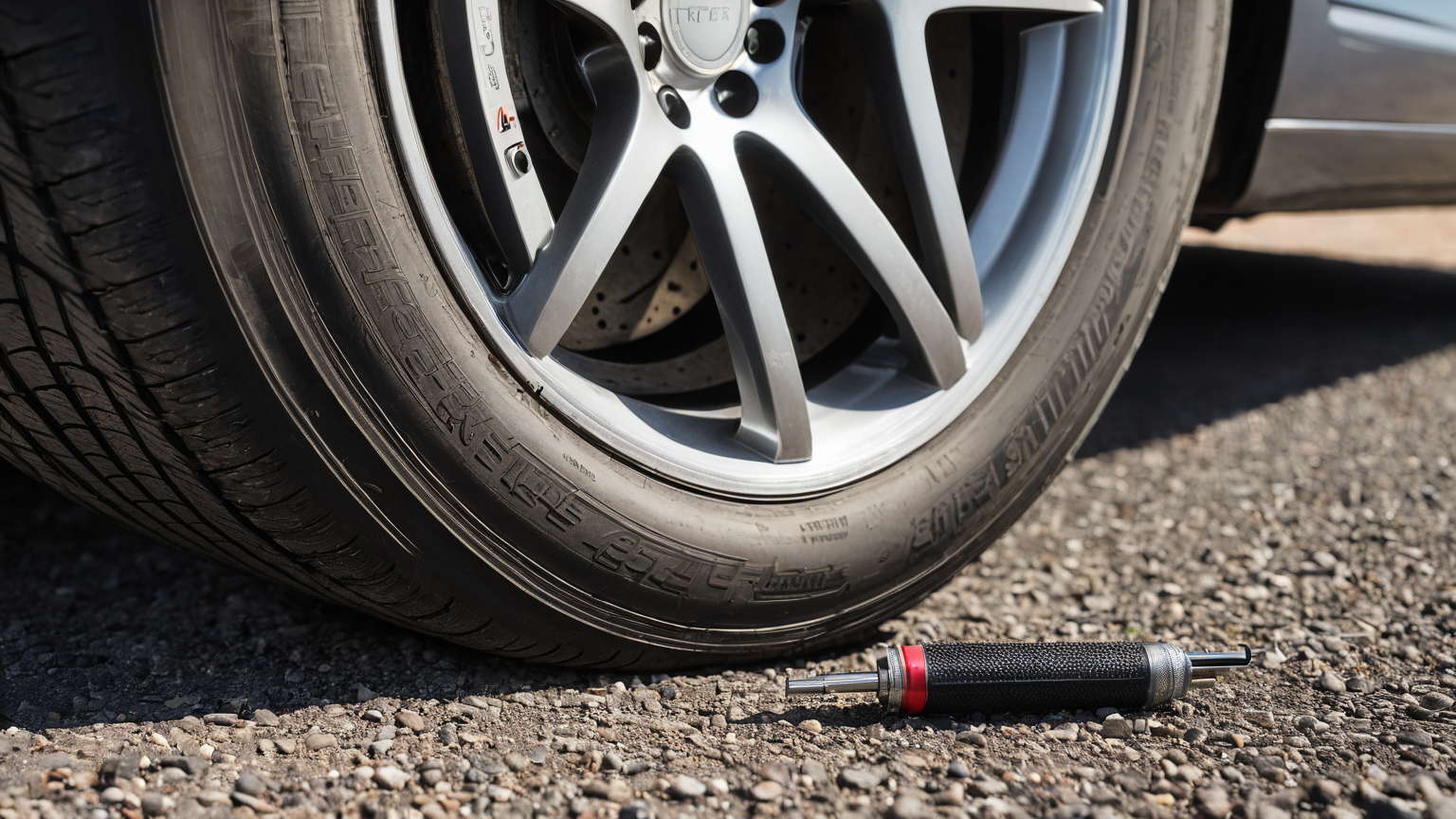
Cold pressure matters most
Pressure rises as tires warm, so the best baseline is a cold reading before driving. Use the vehicle placard in the driver-door area. The number on the tire sidewall is a maximum limit for the tire, not the recommended pressure for your vehicle.
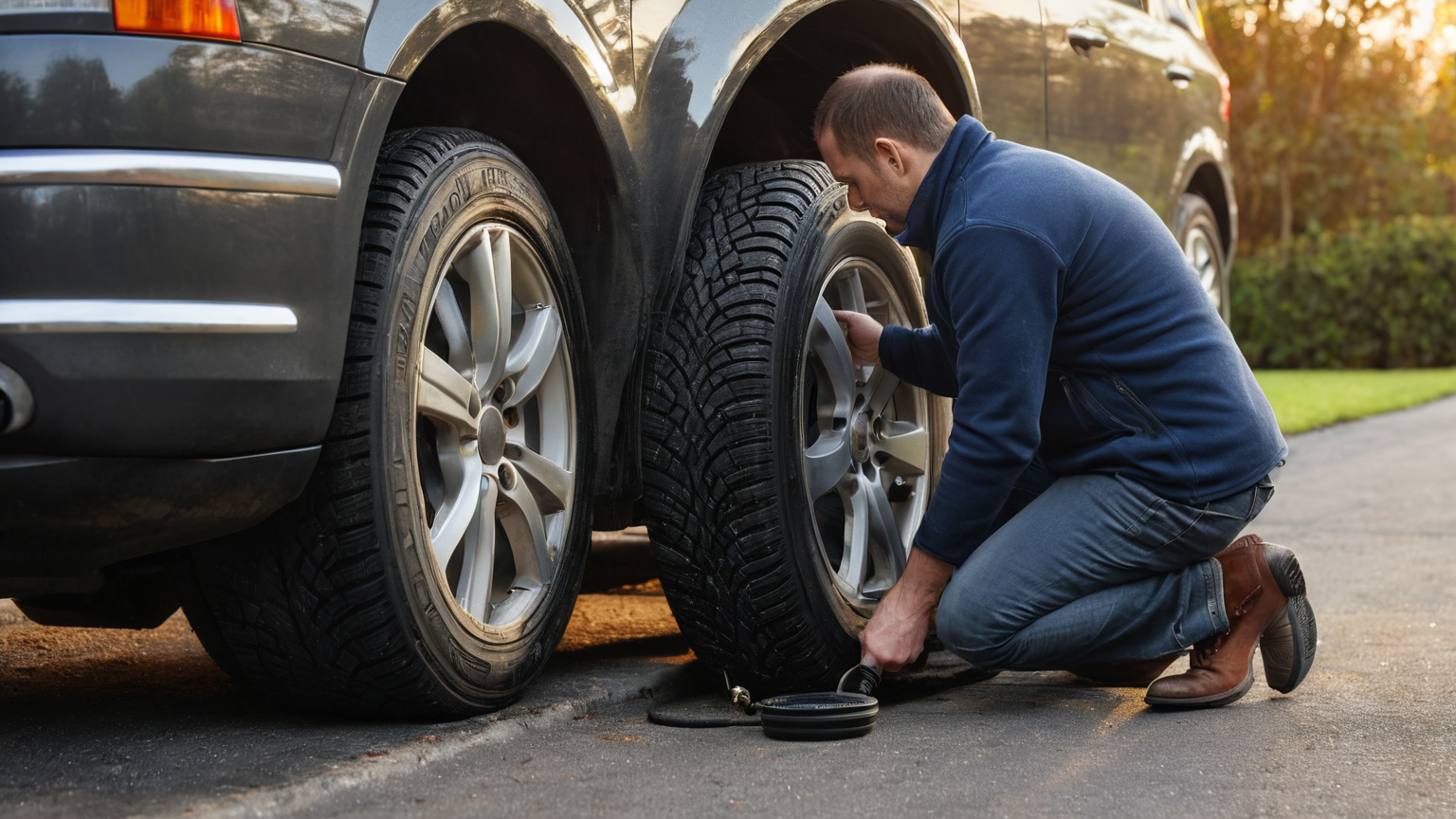
Load is the hidden heat multiplier
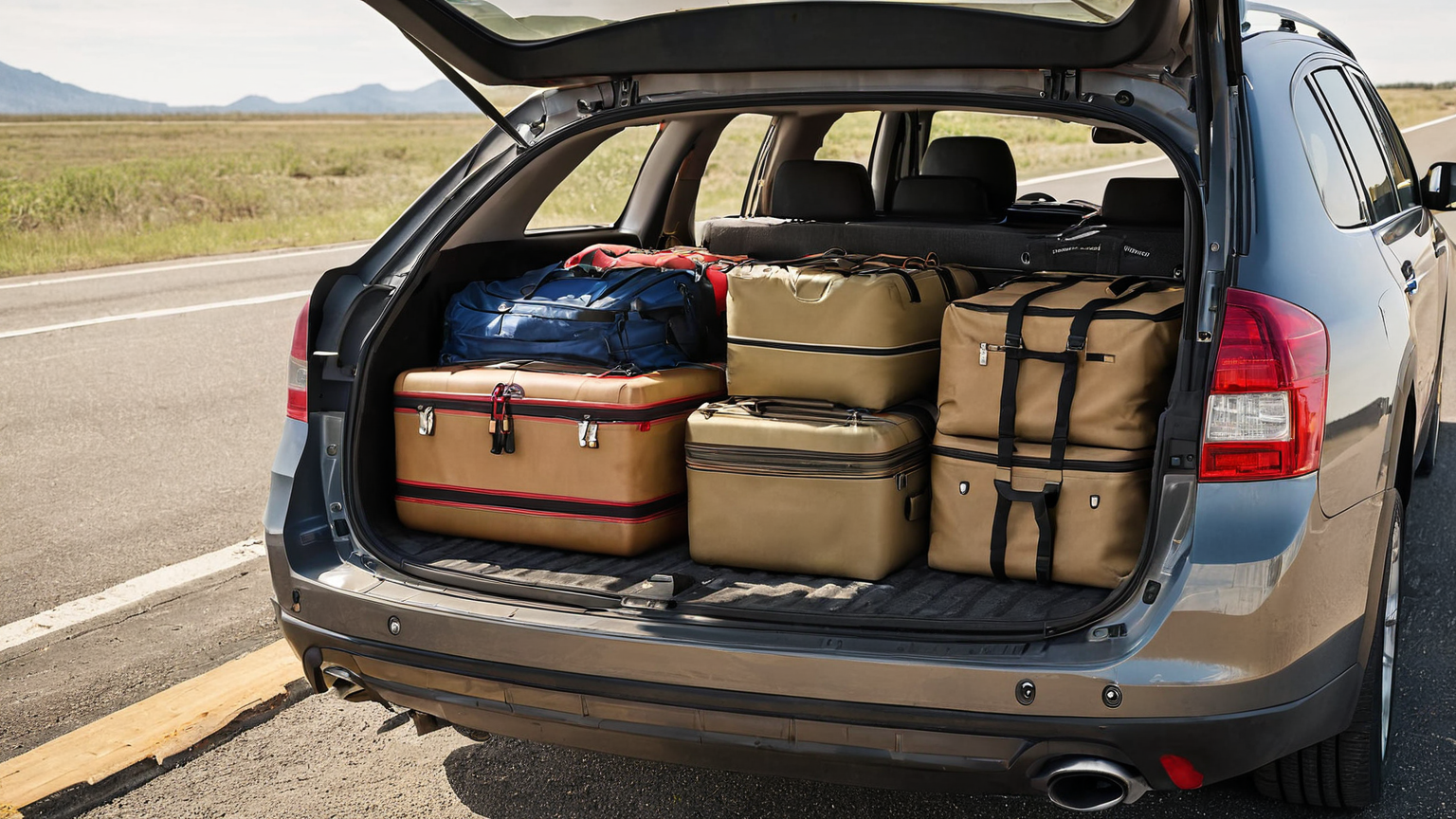
A fully packed vehicle flexes tires more, especially at highway speed. Keep heavy items low and centered, avoid roof overload, and do not ignore payload limits. If the trip includes towing, use the tow vehicle and trailer guidance rather than guessing from passenger-car habits.
What to do when TPMS lights up
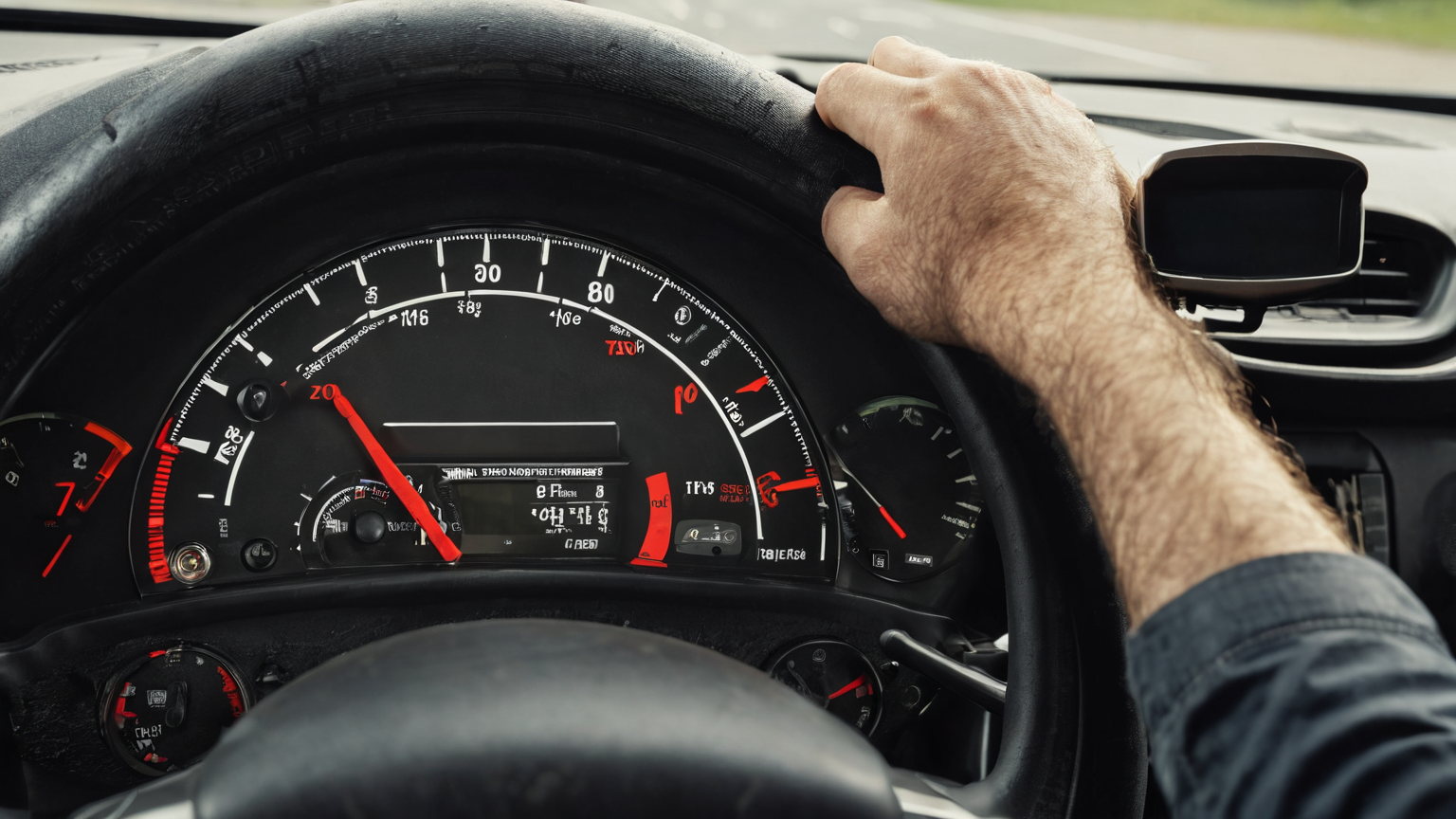
A TPMS warning means stop safely and investigate. It is not a suggestion to finish the next 80 miles. Pull over where safe, inspect visually, check pressure, and inflate or change the tire if needed. If pressure drops again, treat it as a leak until proven otherwise.
Rest-stop walkaround
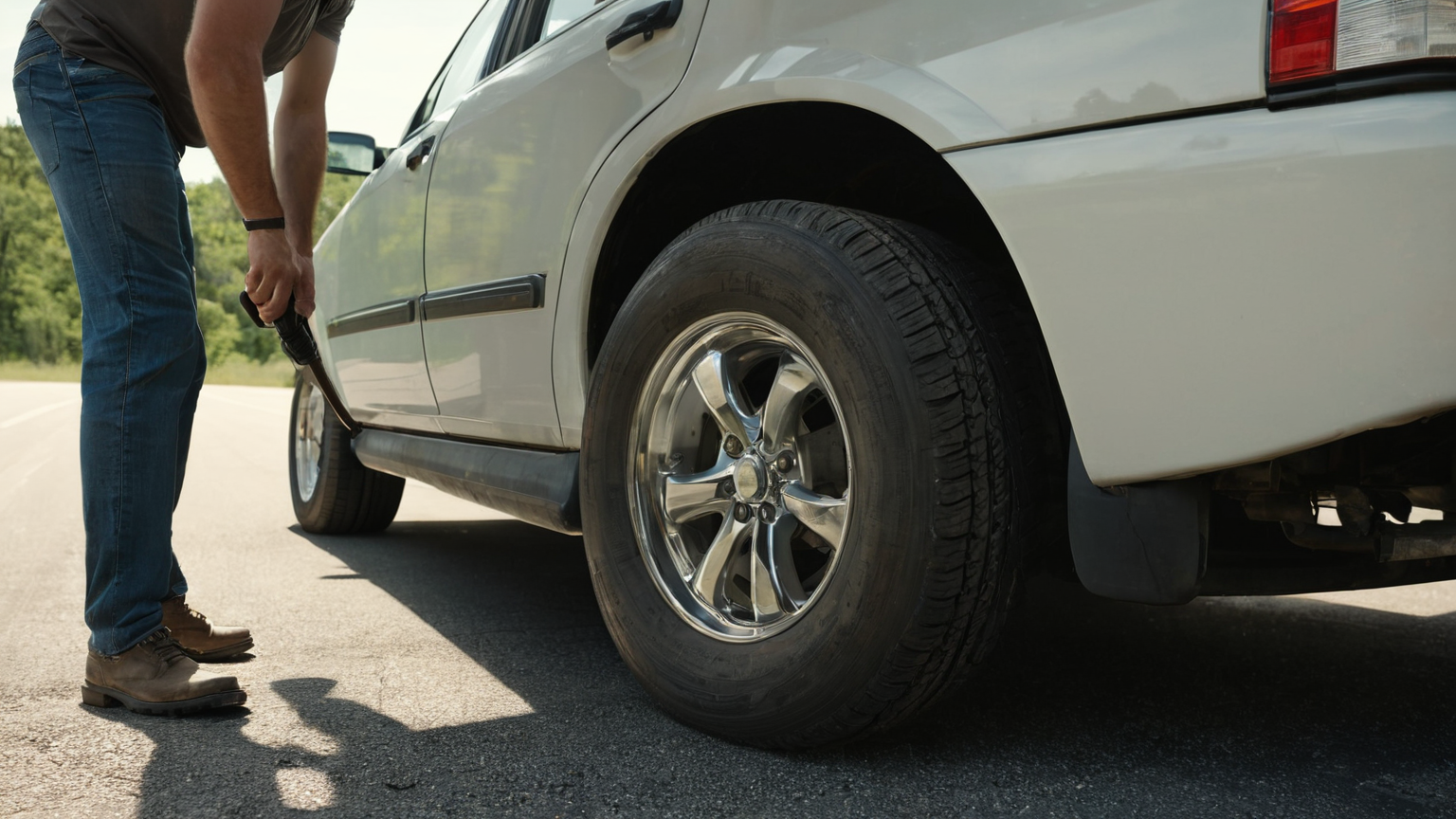
Every fuel or rest stop, take 60 seconds: look for one tire that appears lower, hotter-smelling, damaged, or different. Do not touch a brake rotor or hot wheel hardware. The goal is early detection before a vibration, thump, or blowout risk escalates.
Decision tree
- Tire visibly low or damaged? Do not continue at highway speed.
- TPMS on but tire looks normal? Check all four with a gauge.
- Pressure low by a few PSI and stable? Inflate to placard value cold or adjust carefully if warm.
- Pressure much lower or dropping? Use spare/sealant according to the manual and seek repair.
- Vibration, pull, thumping, or burning smell? Exit traffic and stop safely.
Bottom line
Heat problems are usually built from ordinary neglect: low pressure, too much load, old damage, and delayed response. A gauge, a visual inspection, and a conservative stop decision do more than most accessories.