Trailer Towing Safety: Load, Tongue Weight, and Sway Checklist
A conservative trailer-towing checklist for ratings, payload math, tongue weight, cargo securement, hitch checks, sway, and test drives.
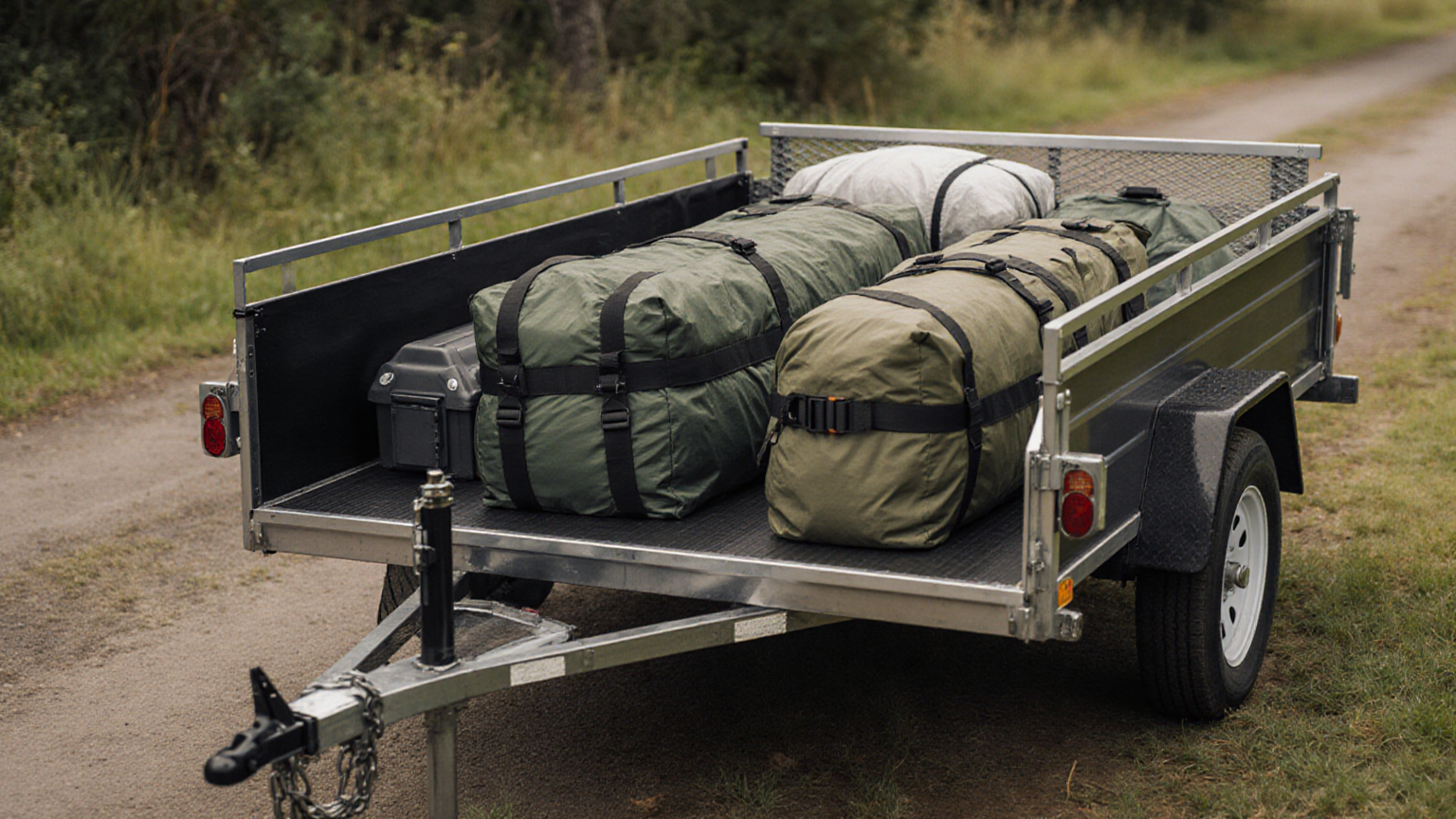
A trailer can be within a vehicle’s advertised tow rating and still be unsafe. The headline number does not account by itself for passengers, cargo in the vehicle, hitch equipment, tongue load, axle limits, tire capacity, wind, speed, or the way cargo is distributed. Safe towing is a chain: ratings, measured weights, correct hardware, secure cargo, pre-trip inspection, and conservative driving. A weak link is not repaired by a stronger engine.
NHTSA’s towing booklet tells drivers to understand the tow vehicle and trailer ratings, match the hitch system, load correctly, and practice before traveling (NHTSA). The vehicle owner’s manual, certification label, receiver label, trailer data plate, tire placards, hitch instructions, and brake-controller instructions are the controlling documents for a specific combination.
No-guess rule: if you cannot identify the lowest applicable rating or measure the loaded combination, postpone the trip. Empty-trailer estimates and internet calculators are planning tools, not proof.
Start with six separate limits
Write these on one worksheet:
- Tow rating: the maximum trailer weight allowed for the exact vehicle configuration under specified conditions.
- GVWR: maximum loaded weight of the tow vehicle or trailer.
- Payload: how much combined occupant, cargo, accessory, and tongue load the tow vehicle can carry.
- GAWR: maximum load on each axle.
- Receiver and hitch-component ratings: limits for receiver, ball mount, ball, coupler, and weight-distribution equipment.
- Tire load capacity: capacity at the specified inflation, with age and condition still acceptable.
The safe limit is the lowest relevant limit after actual loading. A marketing page for a model family may not match your cab, wheelbase, drive system, axle ratio, engine, cooling package, or option content. Use a VIN-specific or configuration-specific towing guide when the manufacturer provides one, such as Ford’s towing calculator and guide, then verify against the labels and owner’s manual in the vehicle.
Payload math before trailer math
Suppose a door-jamb label states 1,400 lb of combined occupant and cargo capacity. This hypothetical trip includes:
| Load in/on tow vehicle | Weight |
|---|---|
| Driver and passenger | 350 lb |
| Two rear passengers | 250 lb |
| Cargo and cooler | 180 lb |
| Hitch hardware | 90 lb |
| Estimated trailer tongue load | 500 lb |
| Total payload used | 1,370 lb |
Remaining payload is 1,400 − 1,370 = 30 lb. That is effectively no planning margin, even if the trailer itself is below the advertised tow rating. Moving cargo from the vehicle into the trailer may reduce vehicle payload but increase trailer gross weight and alter tongue load; every change requires recalculation.
NHTSA’s vehicle-loading material explains why occupant and cargo weight must be compared with the vehicle’s stated capacity (NHTSA vehicle loading). Do not subtract from memory. Read the exact label.
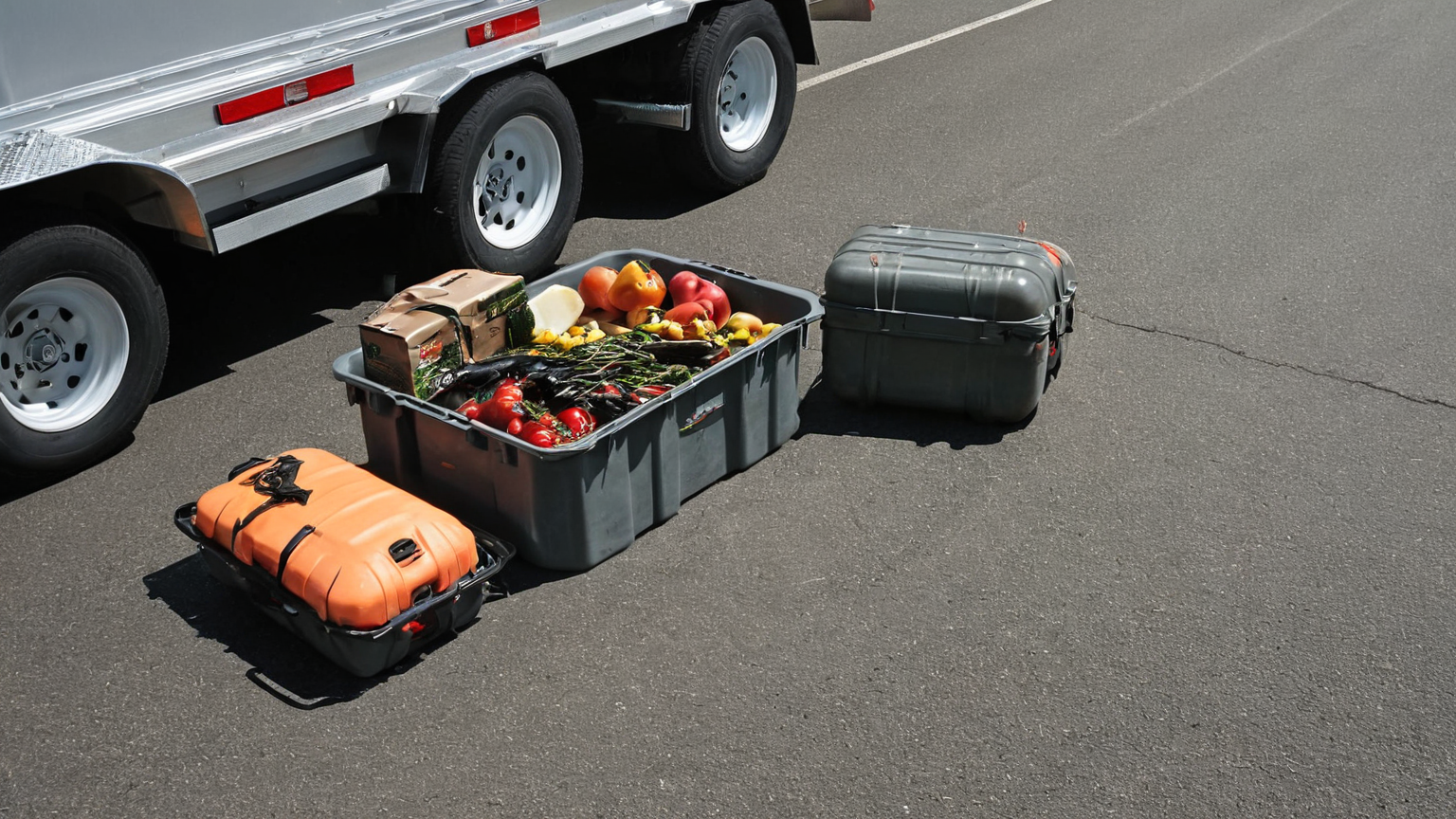
Tongue weight is a measured balance variable
Too little tongue load can contribute to instability; too much can overload the tow vehicle’s rear axle, receiver, tires, or payload. Many conventional-trailer instructions use a planning range around 10–15% of loaded trailer weight, but the trailer and vehicle makers’ specific instructions control.
For a hypothetical 4,000 lb loaded conventional trailer:
- 10% = 4,000 × 0.10 = 400 lb
- 15% = 4,000 × 0.15 = 600 lb
That range is not permission to choose any number within it. The actual combination must comply with every component limit and remain stable. Measure with an appropriate tongue-weight scale or a qualified public/commercial scale procedure. Do not infer tongue weight from rear suspension squat.
A weight-distribution hitch can redistribute some load among axles when approved and adjusted correctly. It does not reduce the trailer’s actual mass, create payload, increase the receiver limit, or fix bad cargo placement. Some unibody vehicles, surge-brake trailers, and hitch systems have restrictions, so follow all manuals.
Load cargo low, centered, and immobile
Place heavy cargo low and near the trailer’s axle area while preserving the maker’s required tongue-load range. Avoid concentrating heavy items at the extreme rear. Secure everything against forward, rearward, lateral, and vertical movement. Close and latch doors, ramps, drawers, and roof items.
Commercial securement regulations do not directly define every private recreational trip, but they show the safety principle: cargo must be contained, immobilized, or secured so it cannot shift or fall (FMCSA cargo rules; 49 CFR 393 Subpart I). Use tie-down points and restraints rated for the load and installed according to their instructions. Bungee cords are not substitutes for properly rated securement.
After the first few miles, stop in a safe place and recheck straps, doors, tires, hubs, and cargo. Soft loads settle; straps can loosen.
The hitch-up checklist
Perform this in a level area away from traffic:
- Coupler fully seated on the correct-size ball; latch closed and secured.
- Ball mount, pin, clip, and receiver properly installed with no visible damage.
- Safety chains attached to designated vehicle points with enough length for turns but not dragging.
- Breakaway cable attached to the tow vehicle independently of the chains, with correct routing.
- Electrical connector secure; running lights, brake lights, turn signals, and hazards tested.
- Trailer brakes and controller tested according to their instructions.
- Jack fully raised and secured; stabilizers retracted.
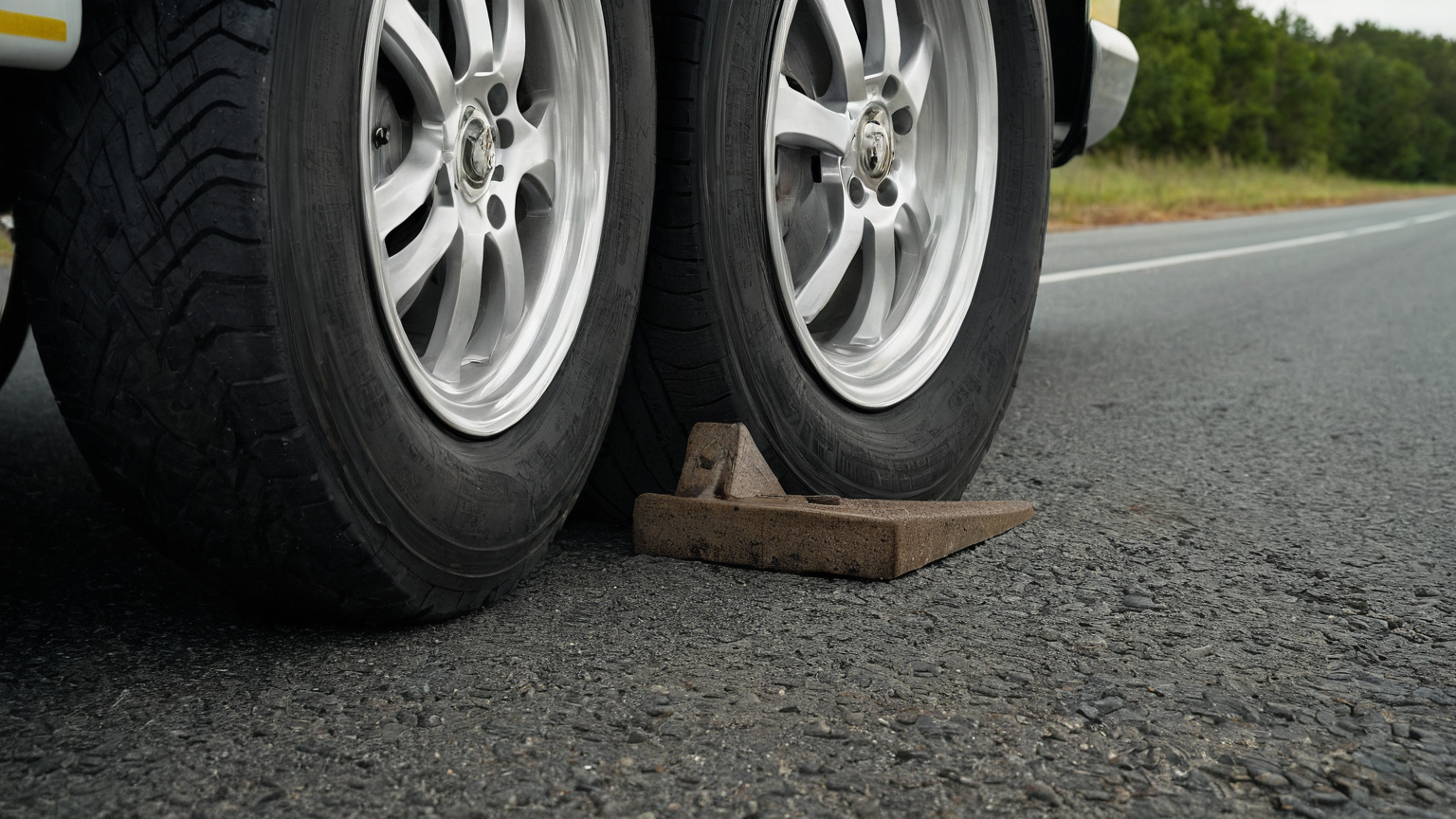
- Wheel chocks removed only after connection is complete and departure is intended.
- Mirrors provide the legally required view.
- Doors, windows, vents, awnings, steps, antennas, and cargo are secured.
Do not attach chains or a breakaway cable to removable or unsuitable points merely because they are convenient. The California RV and trailer handbook provides useful public-road context, but equipment and licensing rules vary by jurisdiction. Verify the rules for every state or province on the route.
Weigh the complete loaded combination
A public scale can provide steer-axle, drive-axle, trailer-axle, and combined weights when used correctly. Compare measured numbers with vehicle GVWR, axle ratings, trailer GVWR, tire limits, receiver limits, and gross combined rating. To calculate actual trailer weight in a suitable multi-pass procedure, follow a recognized scale method and the specific manuals; do not invent a subtraction without understanding which axles were on the platforms.
Record fuel level, water tanks, propane, batteries, passengers, bikes, and cargo exactly as the trip will run. Fresh-water tanks can be heavy: water is roughly 8.3 lb per U.S. gallon, so 30 gallons is about 249 lb before the tank itself. Treat that as an estimate; use actual scale weights for acceptance.
Tires, pressure, and speed
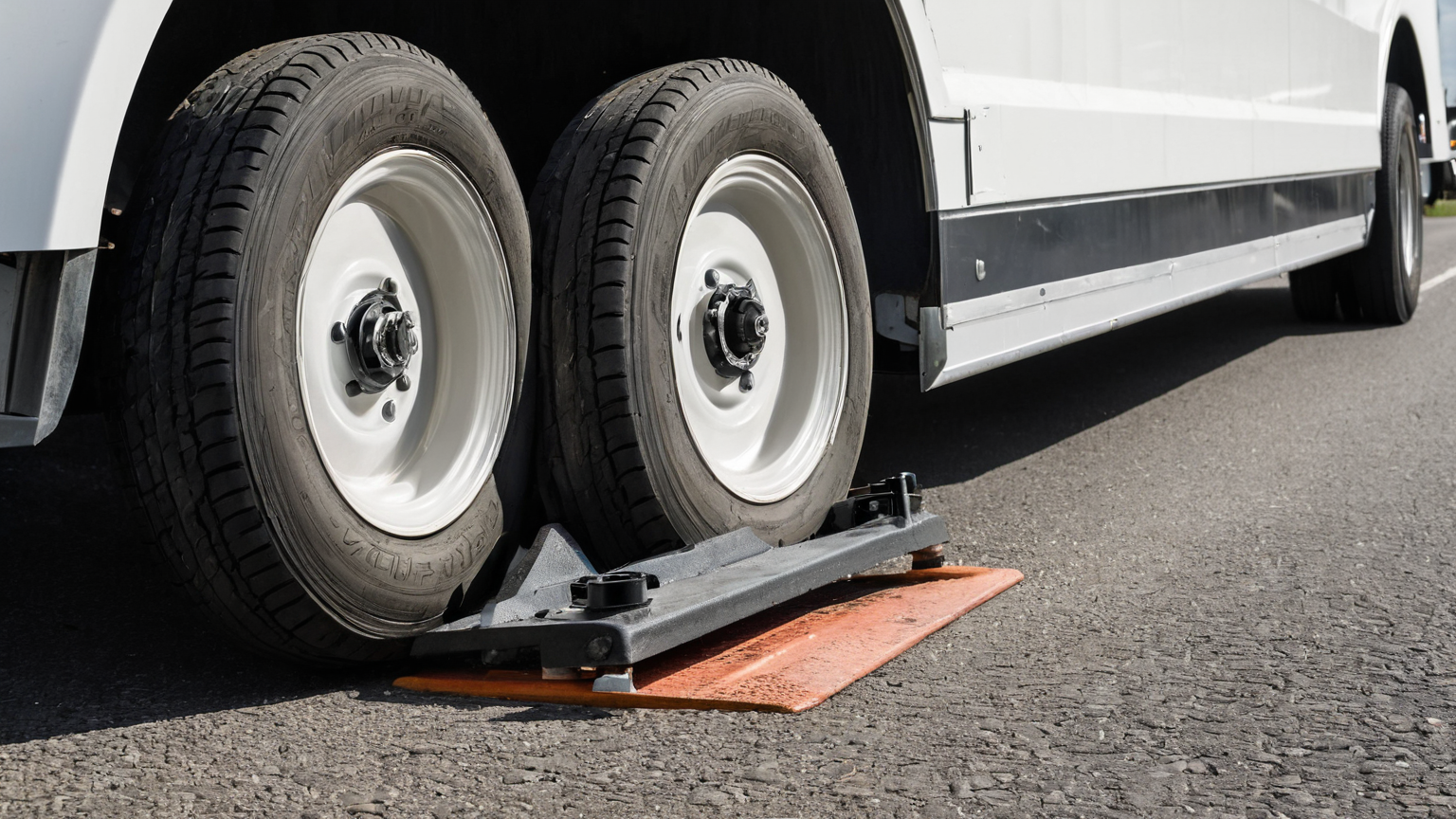
Use cold inflation specified by the vehicle and trailer makers for the loaded condition; do not inflate to a random sidewall number or lower pressure to soften the ride. Check all tow-vehicle and trailer tires, including spares, for pressure, tread, age, cracks, bulges, cuts, objects, and valve damage. NHTSA’s TireWise guidance explains tire labels, maintenance, aging, and recalls.
Trailer tires may have speed restrictions lower than the road’s posted limit. The safest cruising speed is at or below every equipment limit and lower when wind, rain, traffic, grade, visibility, or sway requires it. Add following distance and plan braking early. For heat and load checks, use the summer road-trip tire checklist.
Practice before the trip
Use an empty lot where permitted. Practice straight-line braking, wide turns, mirror scanning, backing with a spotter, and a controlled lane-position setup. Know the total height, width, and length. Set a rule that the spotter remains visible; if sight is lost, stop.
Test trailer brakes at low speed according to the controller instructions. A controller setting that worked for an empty trailer may not suit a loaded one. Do not conduct abrupt public-road tests.
Sway: prevent it and respond without panic
Sway can be triggered or amplified by poor load distribution, insufficient tongue load, excessive speed, crosswinds, passing trucks, steering inputs, tire problems, or incompatible equipment. Prevention is the priority: weigh, distribute, secure, inflate, inspect, and slow down.
If sway begins, keep both hands on the wheel, look where you want to go, ease off the accelerator, and avoid abrupt steering. Follow the tow-vehicle, trailer, and brake-controller instructions for applying trailer brakes or slowing the combination. Do not accelerate to “pull it straight,” and do not make a sudden hard brake application unless an immediate hazard requires emergency braking. When stable, move to a safe place and inspect the load and equipment before continuing.
AAA’s towing guidance emphasizes equipment checks, practice, increased following distance, speed management, and gradual maneuvers (AAA). A sway-control device is not a license to ignore loading or speed.
Hills, heat, and route planning
Long grades can overheat engines, transmissions, and brakes. Use the owner’s manual for gear selection, tow/haul mode, engine braking, cooling precautions, and mountain restrictions. Never ride the brakes downhill. If braking changes, warning lights appear, temperatures rise, or odors suggest overheating, stop at a safe location and obtain appropriate help.
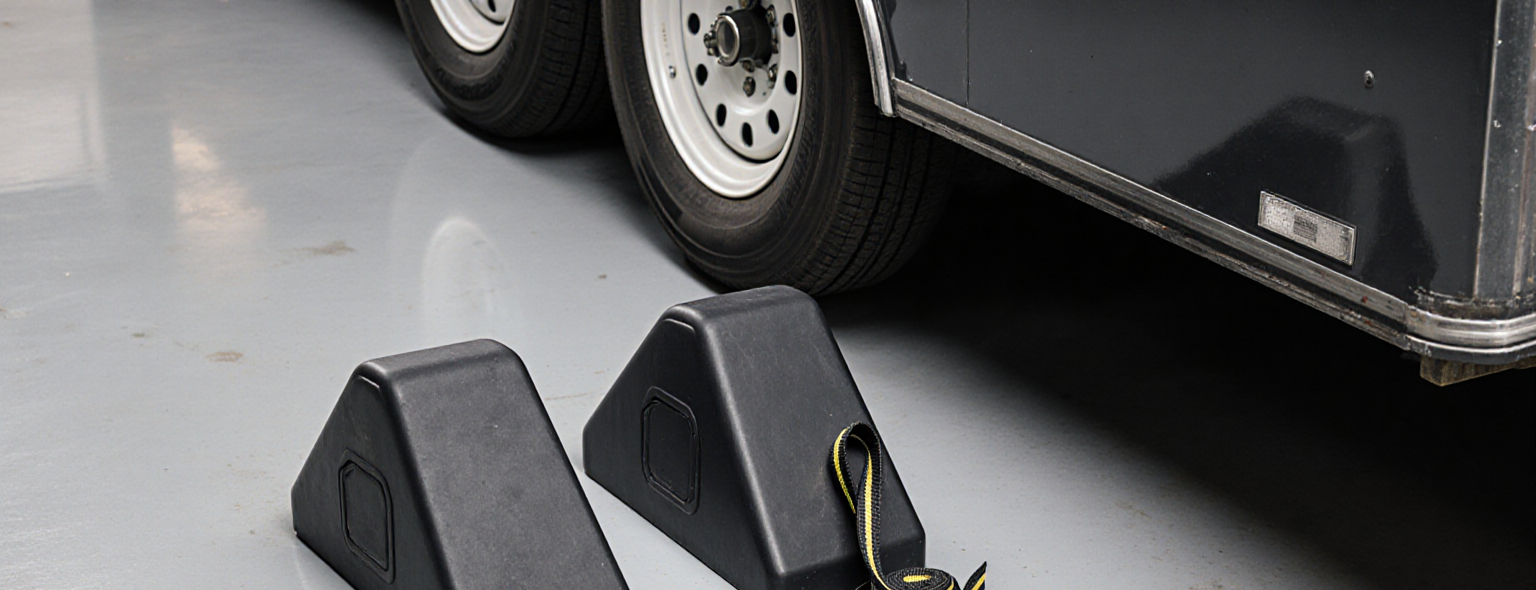
Plan fuel/charging stops, pull-through access, bridge and tunnel restrictions, low clearances, parking, weather, and construction. Carry wheel chocks, warning equipment, and a breakdown plan without standing in traffic. See the roadside emergency kit guide for non-towing essentials.
Final go/no-go table
| Finding | Decision |
|---|---|
| Any measured weight exceeds a rating | No-go: unload or change the combination |
| Tongue weight unknown or outside maker instructions | No-go: measure and rebalance |
| Tire damage, wrong pressure, or capacity uncertainty | No-go: repair or verify |
| Chains, breakaway, brakes, or lights not correct | No-go: fix before moving |
| Cargo can shift by hand | No-go: re-secure with rated equipment |
| Sway appears during low-speed test | No-go: stop and diagnose |
| All documents, measurements, inspections, and tests pass | Proceed conservatively and recheck after the first miles |
A safe tow begins on paper and on a scale. Ratings prevent overload, tongue-weight measurement controls balance, securement keeps that balance from changing, and a test drive exposes problems before highway speed. If any piece is unknown, the correct towing technique is to wait.
Frequently asked questions
What is tongue weight?
Tongue weight is the downward force the trailer coupler applies to the hitch ball. Use the trailer and vehicle maker’s instructions and actual scale measurements; do not estimate it from appearance or suspension squat.
Can a tow rating tell me the safe trailer size by itself?
No. Payload, axle ratings, hitch limits, tires, passengers, cargo, accessories, trailer configuration, and operating conditions can become limiting before the headline tow rating.
What should I do if a trailer starts to sway?
Hold the steering wheel steady, ease off the accelerator, avoid abrupt steering or braking, and follow the tow vehicle and trailer controller instructions. Do not accelerate to pull out of sway.
Do safety chains need to cross?
Many towing instructions specify crossing chains beneath the coupler, but the correct arrangement and attachment points depend on the vehicle, hitch, trailer, and local law. Follow the exact manuals and rules.
Should I use cruise control while towing?
Follow the owner’s manual. Avoid cruise control when conditions, grades, traffic, wind, or trailer behavior require frequent speed changes and direct control.