Used Hybrid vs Gas — Real Total Cost of Ownership Math (EPA + AAA + RepairPal Data)
Used Toyota and Honda hybrids cost $1,500-3,500 more than gas equivalents. EPA fuel data, AAA TCO calculations, and RepairPal repair costs reveal the real payback period.
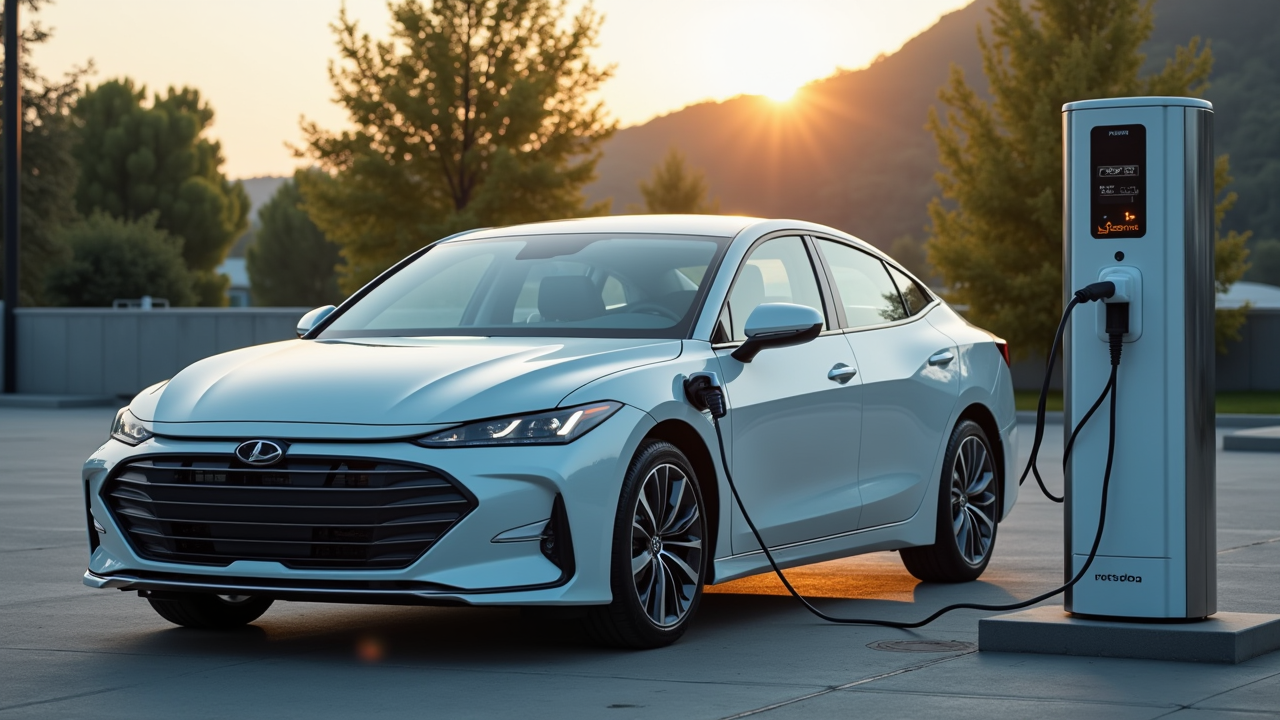
The hybrid vs gas decision for used car buyers comes down to math: how much premium does the hybrid version cost, how much fuel does it save, how much does the battery actually cost to replace, and how does resale value differ. This article works through each component using EPA fuel data, AAA cost-of-driving estimates, RepairPal maintenance data, and KBB pricing for the most common 2018-2022 hybrid models versus their gas equivalents.
The conclusion across most scenarios: hybrids pay back in 4-6 years at typical usage, are slightly cheaper to maintain (not more expensive — that’s myth), and hold resale value better. The break-even depends on your specific mileage, fuel price, and ownership horizon — and this article gives you the numbers to run for your situation.
For the underlying vehicle data, see the Camry, Civic, and under-$25K SUVs posts. This post is the cost-of-ownership math layer on top.
The fuel savings math
EPA combined fuel economy for the most popular gas vs hybrid pairs (2018-2022):
| Model pair | Gas combined | Hybrid combined | Difference |
|---|---|---|---|
| Toyota Camry vs Camry Hybrid | 32 MPG | 52 MPG | +20 MPG |
| Toyota RAV4 vs RAV4 Hybrid | 30 MPG | 40 MPG | +10 MPG |
| Honda CR-V vs CR-V Hybrid (2020+) | 30 MPG | 38 MPG | +8 MPG |
| Honda Civic vs Insight | 36 MPG | 52 MPG | +16 MPG |
| Hyundai Elantra vs Elantra Hybrid (2021+) | 35 MPG | 54 MPG | +19 MPG |
Annual fuel cost at 12,000 miles/year, $3.50/gal:
| Vehicle | MPG | Annual fuel | Vs gas equivalent |
|---|---|---|---|
| Camry gas | 32 | $1,313 | — |
| Camry Hybrid | 52 | $808 | -$505 |
| RAV4 gas | 30 | $1,400 | — |
| RAV4 Hybrid | 40 | $1,050 | -$350 |
| CR-V gas | 30 | $1,400 | — |
| CR-V Hybrid | 38 | $1,105 | -$295 |
| Civic gas | 36 | $1,167 | — |
| Insight (Civic Hybrid) | 52 | $808 | -$359 |
At higher mileage (15,000/yr) or higher fuel prices ($4.00/gal), savings scale proportionally — about 20-25% more.

The hybrid premium (2024 KBB)
Premium is what you pay for the hybrid version above the equivalent gas trim, at the same mileage and condition.
| Pair | 2019, ~60K mi gas | 2019, ~60K mi hybrid | Premium |
|---|---|---|---|
| Camry LE vs Camry Hybrid LE | $20,500 | $23,000 | $2,500 |
| RAV4 LE vs RAV4 Hybrid LE | $22,500 | $25,000 | $2,500 |
| Civic LX vs Insight LX | $18,500 | $21,000 | $2,500 |
Hybrid premium clusters around $2,000-3,500 for most 2018-2021 pairs at typical used mileage.
Payback period
Premium ÷ annual fuel savings = years to break even on fuel alone.
| Pair | Premium | Annual savings | Payback (yrs) |
|---|---|---|---|
| Camry vs Camry Hybrid | $2,500 | $505 | 4.95 |
| RAV4 vs RAV4 Hybrid | $2,500 | $350 | 7.14 |
| CR-V vs CR-V Hybrid | $2,000 | $295 | 6.78 |
| Civic vs Insight | $2,500 | $359 | 6.96 |
If you keep the car 5+ years (typical), Camry Hybrid pays back fully on fuel alone. The compact SUVs and Insight take 6-7 years on fuel alone.
But fuel isn’t the only factor — let’s add the others.
Maintenance cost (RepairPal)
| Vehicle | Annual maintenance |
|---|---|
| Toyota Camry (gas) | $388 |
| Toyota Camry Hybrid | $384 |
| Toyota RAV4 (gas) | $429 |
| Toyota RAV4 Hybrid | $429 |
| Honda CR-V (gas) | $407 |
| Honda CR-V Hybrid | $410 |
| Honda Civic (gas) | $368 |
| Honda Insight | $375 |
| Toyota Prius | $408 |
Hybrid maintenance is roughly identical to gas equivalents. The 2-3% gap in either direction is statistical noise.
The reasons hybrids aren’t more expensive to maintain:
-
Brakes last much longer. Regenerative braking does most of the slowing work. Toyota brake pad life on hybrids: 80,000-120,000 miles versus 40-60,000 miles on gas equivalents. That’s a $400-600 maintenance saving every 80,000 miles.
-
eCVT has fewer parts than conventional automatic. Toyota’s hybrid transmission (called e-CVT but mechanically a power-split planetary system) has no torque converter, no clutches, no shift solenoids in the conventional sense. Failures are rare.
-
Engine cycles less aggressively. Hybrid engines run less hot and at narrower RPM ranges (the electric system fills in transients), reducing wear.
-
Battery doesn’t require service. No fluid changes, no filter replacements. The HV battery cooling system needs occasional dust cleaning (cabin filter for the battery vent), trivial.
The areas where hybrids cost more:
- 12V battery (yes, hybrids have one) is sometimes specialty-sized — $200-400 every 4-6 years vs $100-200 for gas.
- Eventual high-voltage battery replacement after warranty (covered next).
High-voltage battery — the real story
The hybrid battery question is the most-asked. The actual data:
Warranty coverage
- Toyota: 8 years/100,000 miles (federal); 10 years/150,000 miles in CARB states (CA, CO, CT, DE, MD, ME, MA, NJ, NM, NY, OR, PA, RI, VT, WA)
- Honda: 8 years/100,000 miles federal, 10 years/150,000 miles in CARB states
- Hyundai/Kia: 10 years/100,000 miles standard
Failure rate
Consumer Reports member surveys: less than 10% of Toyota hybrids replace the HV battery during the typical ownership period. Most failures occur after 150,000-200,000 miles, often years past warranty.
Toyota Prius taxis in some markets routinely cross 300,000+ miles on the original battery. The early Prius (2001-2003) had real durability issues; everything from 2010+ on TNGA platform shows much better life.
Replacement cost (2024)
| Vehicle | Battery replacement |
|---|---|
| Toyota Prius (4th gen) | $2,500-3,500 |
| Toyota Camry Hybrid | $3,000-4,000 |
| Toyota RAV4 Hybrid | $3,500-4,500 |
| Honda Insight | $2,500-3,500 |
| Honda CR-V Hybrid | $3,000-4,000 |
Aftermarket / refurbished battery options: $1,500-2,500 with a 1-3 year warranty, available from specialty hybrid shops in major metros.
What this means for the buyer
If you’re buying a 2018-2020 hybrid with 60-80K miles, you’re well within OEM warranty for both federal (8/100K) and CARB (10/150K) coverage. You are very unlikely to face battery replacement during typical 5-year ownership.
If you’re buying with 90,000+ miles, factor a possible $3,000 replacement reserve into your TCO over the next 5-7 years — but it’s still less expensive than the fuel savings over that period in most scenarios.

Resale value (iSeeCars)
iSeeCars 2024 analysis of 5-year retention values:
| Vehicle | 5-year retained value |
|---|---|
| Toyota RAV4 Hybrid | 67% |
| Toyota Camry Hybrid | 64% |
| Toyota RAV4 (gas) | 62% |
| Toyota Camry (gas) | 58% |
| Honda CR-V Hybrid | 60% |
| Honda CR-V (gas) | 56% |
Hybrid versions retain 4-7% more value over 5 years. On a $25,000 purchase, that’s $1,000-1,750 in additional resale at year 5 — meaning the effective hybrid premium at sale is lower than the purchase premium suggests.
Total 5-year cost
Combining purchase, fuel, maintenance, and resale:
Camry vs Camry Hybrid (2019, 60K miles, 12K mi/yr, $3.50/gal, owned 5 years)
| Cost | Camry gas | Camry Hybrid |
|---|---|---|
| Purchase | $20,500 | $23,000 |
| Fuel (5 yrs) | $6,565 | $4,040 |
| Maintenance (5 yrs) | $1,940 | $1,920 |
| Resale at 5 yrs | -$11,890 | -$14,720 |
| 5-year total | $17,115 | $14,240 |
Camry Hybrid wins by $2,875 over 5 years.
RAV4 vs RAV4 Hybrid
| Cost | RAV4 gas | RAV4 Hybrid |
|---|---|---|
| Purchase | $22,500 | $25,000 |
| Fuel (5 yrs) | $7,000 | $5,250 |
| Maintenance (5 yrs) | $2,145 | $2,145 |
| Resale at 5 yrs | -$13,950 | -$16,750 |
| 5-year total | $17,695 | $15,645 |
RAV4 Hybrid wins by $2,050 over 5 years.
The hybrid wins both pairs — and the resale advantage matters more than the maintenance equivalence.
When gas wins
The hybrid math doesn’t favor every situation. Cases where gas is better:
-
Very low annual mileage (under 7,000 miles/year). Fuel savings shrink proportionally; hybrid premium becomes harder to recover.
-
Short ownership horizon (under 3 years). Premium isn’t fully amortized via fuel + resale.
-
Very low gas prices (sustained under $2.80/gal). Reduces the per-mile fuel cost gap.
-
Cheap gas alternative available (e.g., a 40+ MPG gas Civic at $14K vs Insight at $20K). The math depends entirely on the actual prices and miles.
-
Existing CARB rebate or incentive on gas car (rare — usually skews toward hybrid).
When hybrid wins big
-
High annual mileage (15,000+ miles/year). Fuel savings scale; payback shortens to 3-4 years.
-
Long ownership (7+ years). All advantages compound; resale matters less since you keep it longer.
-
Higher fuel prices ($4.00+ per gal). Each mile saves more.
-
Urban/stop-and-go driving. This is where hybrids most outperform their EPA combined ratings — they can hit 60+ MPG in city driving where gas equivalents do 25 MPG.
-
Toyota/Honda models specifically. The reliability data for these brands is exceptional; hybrid system durability matches gas.
Bottom line
For most 2018-2022 used Toyota and Honda models, the hybrid version wins on 5-year total cost of ownership for typical users. The fuel savings of $300-500/year, plus 4-7% better resale value, more than offset the $2,000-3,500 purchase premium. Maintenance is essentially equivalent. The hybrid battery, while expensive if it fails, is statistically unlikely to fail during typical ownership.
Run your specific numbers: your annual mileage, your local fuel price, your planned ownership length. The framework above gives you the inputs; the answer for your situation may be either way, but most users find hybrid wins.
For the underlying model data, see Camry analysis and Civic analysis. For SUV options, see under-$25K SUV picks — RAV4 Hybrid is increasingly in budget.