Best Dash Cams 2024 — Real Performance Data and Buying Guide
Top dash cams compared: video quality, parking mode, GPS, app integration. Real test data on BlackVue, VIOFO, Garmin, and budget alternatives.
Dash cams have moved from niche enthusiast gear to mainstream safety equipment. Per industry data, dash cam adoption in U.S. passenger vehicles grew from 5% in 2018 to 23% in 2024. The reasons: dramatic price drops, insurance disputes increasingly settled with video evidence, parking mode protection from theft and damage, and improving image quality across all price tiers.
This article uses Wirecutter testing, RTINGS measurement data, PCMag reviews, and Reddit community feedback to evaluate dash cams across price tiers. Topics include essential features, resolution choices, top picks by category, memory card requirements, and insurance considerations.
For complementary content, see front-rear dash cam setup and parking mode dash cam.
What actually matters
Per Wirecutter and RTINGS testing, the features that distinguish good dash cams from mediocre ones:
Video quality: 1440p QHD is the practical sweet spot. 1080p struggles with license plates at distance. 4K is excellent but creates large files. Sony Starvis sensors handle low light significantly better than cheaper alternatives.
Reliable parking mode: continuous monitoring while vehicle is parked. Either time-lapse mode (low frame rate continuous) or motion/impact triggered. Both work; preference depends on use case.
GPS integration: tags video with location and speed. Useful for insurance documentation and route review. Standard on $100+ dash cams.
Night vision: cheap dash cams have poor low-light performance. HDR plus Sony Starvis sensors deliver meaningful improvement.
Supercapacitor power: better than lithium battery in extreme temperatures. Dash cams in hot summers or freezing winters fail with batteries; supercapacitors work reliably.
App connectivity: Wi-Fi for video review and configuration. Standard at mid-tier and above.
What doesn’t matter as much
LCD touchscreens add cost without core functionality. Most users review video via phone app. Smaller dash cams (Garmin Mini 2) skip the screen entirely.
Voice control is gimmicky. Cloud connectivity ($5-10/month subscription) is useful for fleet vehicles but overkill for most personal use.
Top mid-range pick: VIOFO A129 Plus Duo
VIOFO A129 Plus Duo Front and Rear Dash Cam
Price · $200-260
+ Pros
- · 2K 1440p front + 1080p rear
- · Sony Starvis sensors front and rear
- · Supercapacitor power for temperature reliability
- · Strong parking mode with motion detection
− Cons
- · Installation requires rear camera cable routing
- · App interface less polished than Garmin
- · No cloud connectivity at this tier
Paid affiliate link. Price, availability, and ratings can change; verify details on the retailer page before buying.
VIOFO A129 Plus Duo is the consistent value recommendation across reviews. The dual-channel front+rear setup, Sony Starvis sensors, and supercapacitor power deliver near-premium performance at mid-range price.
For most drivers, this is the right primary purchase. The $200-260 cost is justified by 5+ year longevity, comprehensive coverage, and reliable performance.
Premium option: BlackVue DR970X-2CH
BlackVue DR970X-2CH 4K Dash Cam System
Price · $500-600
+ Pros
- · 4K front + 1080p rear with Sony Starvis
- · Cloud connectivity via Wi-Fi or LTE
- · Stealth design (no LCD screen)
- · Strong parking mode with optional battery pack
− Cons
- · Premium pricing significant
- · Cloud features require subscription
- · Cable installation more complex
Paid affiliate link. Price, availability, and ratings can change; verify details on the retailer page before buying.
BlackVue DR970X-2CH is the premium choice for users wanting 4K front recording, cloud connectivity, and refined integration. The stealth design (no LCD) keeps it unobtrusive in modern car interiors.
Cloud connectivity is the differentiator at this tier. Real-time alerts to phone when parked vehicle is impacted, location tracking, and video clip cloud backup. Useful for high-value vehicles or commercial use.
Budget pick: VIOFO A119 V3
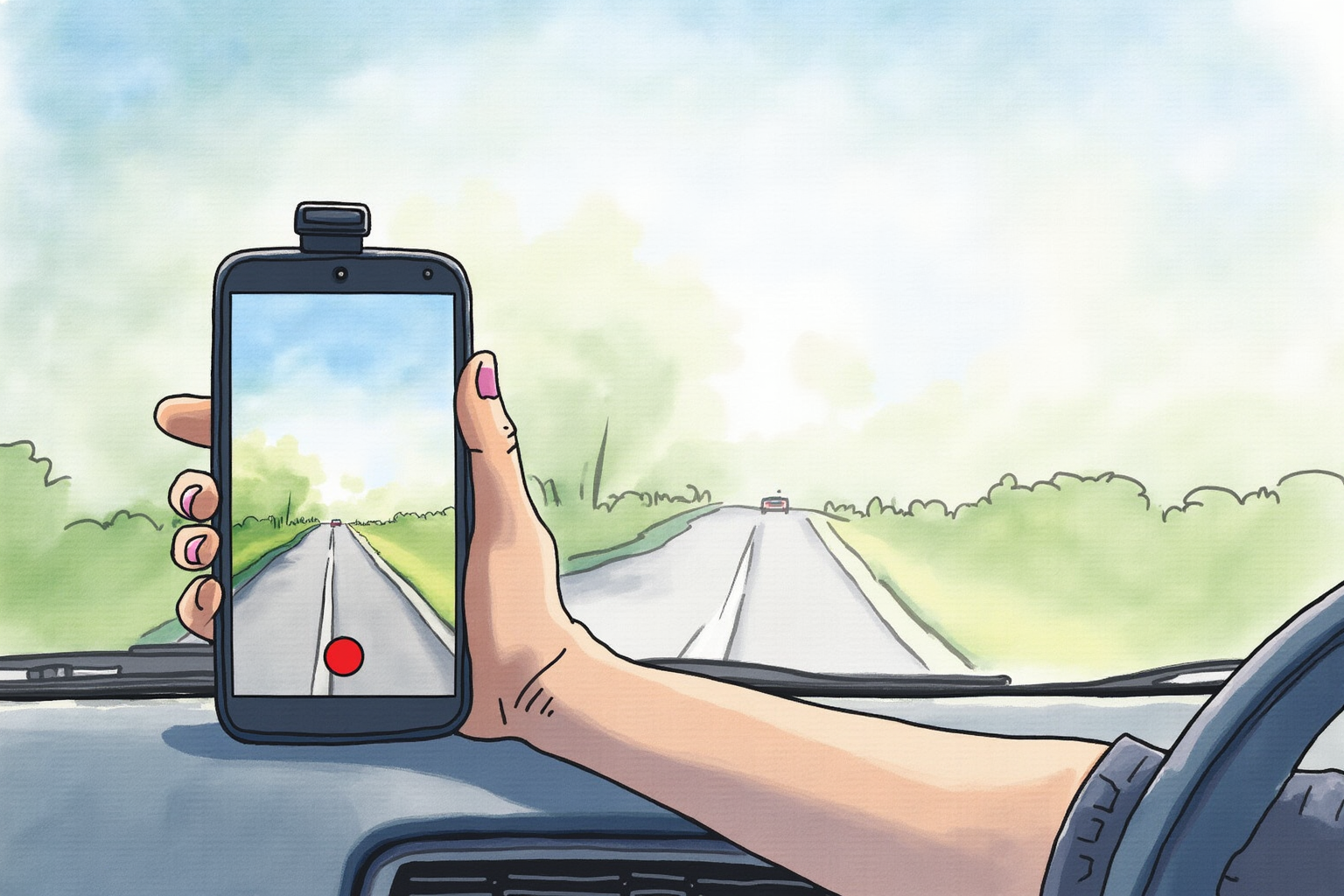
VIOFO A119 V3 Dash Cam 2K QHD
Price · $90-130
+ Pros
- · 1440p QHD with Sony Starvis IMX335
- · Supercapacitor power
- · Strong parking mode for the price
- · Reliable build quality
− Cons
- · Front-only (no rear camera at this price)
- · No GPS at base price (add-on $30)
- · Smaller form factor than premium
Paid affiliate link. Price, availability, and ratings can change; verify details on the retailer page before buying.
VIOFO A119 V3 is the consistent budget recommendation. 1440p quality and supercapacitor power put it ahead of cheaper alternatives. Front-only coverage is the trade-off — rear vehicle visibility unavailable.
Best for: budget-conscious buyers, drivers in low-incident areas, vehicles where rear coverage isn’t priority.
Compact pick: Garmin Dash Cam 67W
Garmin Dash Cam 67W
Price · $220-260
+ Pros
- · 1440p QHD with 180-degree wide angle
- · Compact form factor under rear-view mirror
- · Voice control (Garmin app integration)
- · G-Force incident detection
− Cons
- · Single channel (front only)
- · Garmin app required for most features
- · Premium pricing for front-only
Paid affiliate link. Price, availability, and ratings can change; verify details on the retailer page before buying.
Garmin Dash Cam 67W targets users who want compact, premium-feel dash cam without dual-channel complexity. The 180-degree wide angle captures more of the road and adjacent lanes than typical 130-150 degree dash cams.
Best for: drivers wanting easy installation with compact design, those who value Garmin ecosystem integration.
What to avoid
Sub-$50 generic dash cams: quality control issues, batteries fail in heat, poor video quality, short useful life. False economy.
LCD-screen-only dash cams without app: increasingly outdated design. App connectivity should be standard above $100.
Dash cams without supercapacitor in hot climates: lithium batteries fail at 110°F+ interior temperatures common in summer. Supercapacitor is essential for southern U.S. and Arizona/Texas drivers.
4K dash cams without high-endurance memory card: video write requirements exceed standard card capabilities. Card failures become weekly events.
Installation considerations
Mount dash cam high on windshield, behind rear-view mirror, not blocking driver view. Most state regulations allow dash cam installation; check local rules. California requires placement in specific dashboard locations.
Power options:
- Cigarette lighter plug: simple, but cable is visible across dashboard
- Hardwired (12V acc/constant): clean cable run, enables parking mode, requires installation work
- OBD2 power adapter: easy install, similar to hardwired
Most users start with cigarette lighter plug, upgrade to hardwiring later if they want parking mode.
Memory card buying
Per RTINGS testing, memory card quality is the #1 cause of dash cam reliability issues. Specifically:
Use only “high endurance” or “dash cam specific” cards. SanDisk High Endurance, Samsung PRO Endurance, Lexar High Endurance. Avoid: SanDisk Ultra, generic Amazon SD cards, low-cost no-name brands.
Size recommendations:
- 64GB minimum (1080p front-only)
- 128GB recommended (1440p, parking mode use)
- 256GB for 4K dash cams or heavy parking mode use
Replace card every 2-3 years even with high-endurance models. Cards degrade with continuous writing.
Insurance and legal considerations
Per insurance industry data and state regulations:
Coverage of dash cam footage: most U.S. insurers accept dash cam video as evidence in claim disputes. State laws around dash cam admissibility vary; most allow it.
Insurance discounts: some insurers offer 5-10% discounts for dash cam-equipped vehicles. Check with your provider.
Recording legality: legal in all U.S. states for vehicle exterior. Interior recording (passenger conversations) may require consent in two-party states (California, Florida, etc.). Most dash cams don’t record cabin audio by default.
Parking mode and privacy: capturing other vehicles’ license plates is generally legal. Don’t share dash cam footage publicly without considering privacy implications.
Bottom line
For most drivers: VIOFO A129 Plus Duo at $200-260 is the right purchase. Dual-channel coverage, Sony Starvis sensors, supercapacitor power, 1440p quality.
For premium users: BlackVue DR970X-2CH at $500-600 adds 4K front recording and cloud connectivity.
For budget: VIOFO A119 V3 at $90-130 is solid front-only choice.
For compact/clean install: Garmin Dash Cam 67W at $220-260 with 180-degree wide angle.
Pair with quality memory card (SanDisk High Endurance 128GB or Samsung PRO Endurance) and consider hardwiring for parking mode after initial install.
For complementary reading, see front-rear dash cam setup, parking mode dash cam, and the car electronics category.
Choose by evidence need, not only resolution
Dash cam marketing often makes resolution sound like the whole decision, but the better question is what evidence you need to preserve. A commuter mainly needs reliable daytime and night incident capture, a wide enough view, correct time stamps, and a memory card that survives constant writes. A parked street vehicle needs parking mode power management and motion or impact recording that will not drain the battery. A rideshare or family vehicle may need cabin audio rules, privacy decisions, and a simple way to export clips without handing over the whole card.
Use a scenario-first comparison. If your biggest risk is front-end collision evidence, a stable front camera with good night exposure may beat a fragile two-channel setup. If rear-end disputes are common in your driving, a rear camera becomes more valuable than 4K branding. If you park in heat, a supercapacitor design and high-endurance card matter more than a screen. If the app is unreliable, make sure the unit can still save protected clips with a physical button.
| Driver need | Priority feature | Avoid overpaying for |
|---|---|---|
| Basic accident record | Reliable loop recording and time stamp | Cloud plans you will not use |
| Hit-and-run parking risk | Hardwire kit with low-voltage cutoff | Parking mode without battery protection |
| Night commuting | Sensor performance and exposure control | Resolution claims without sample footage |
| Easy evidence sharing | Simple clip lock/export workflow | Complex apps that fail offline |
Installation and maintenance quality gate
A dash cam is only useful if it records the moment you need. After installation, check the field of view, date/time, audio setting, GPS lock if used, and whether the camera starts automatically after the car sits overnight. Once a month, pull one ordinary clip and verify it plays on another device. This catches corrupted cards, loose power cables, wrong loop settings, and cameras that silently stopped recording.
Keep the legal and privacy boundary clear. Placement rules vary by state, audio recording consent can matter, and sharing footage publicly can expose plates, faces, locations, or passengers. Treat the camera as an evidence tool for insurers, police reports, or your own incident notes, not as entertainment. That boundary is what turns a dash cam from a gadget purchase into a practical safety record.